
Life with a young child is often fast-paced, filled with constant movement and curiosity. Finding an activity that is both calming and beneficial can be challenging. That’s where the DIY toddler busy board comes in—a simple yet powerful tool designed to engage little hands and curious minds. These activity boards encourage tactile exploration through everyday actions like pushing, pulling, and turning, helping children develop fine motor skills and sensory awareness. Whether homemade or store-bought, busy boards transform playtime into a focused, enriching experience that supports early childhood development.
In this article, we’ll break down the many benefits of activity boards and understand how this seemingly simple tool becomes an essential driver of your child’s development
Pretty in Pastel
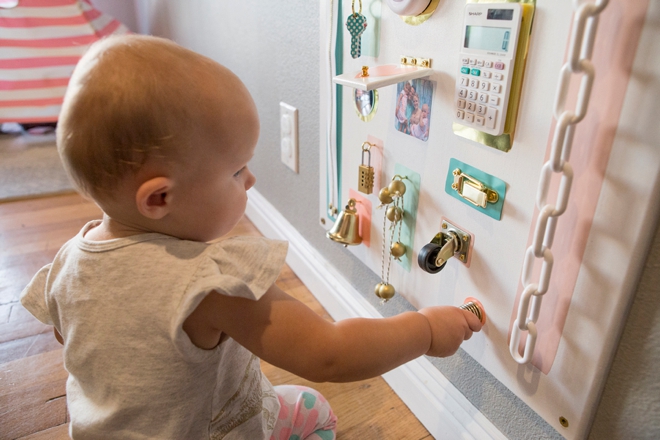
Combining ergonomics and design, this sensory play mat features a pastel color palette to minimize eye strain and promote concentration. It incorporates various tactile elements—buttons, zippers, bumpers, latches, and flaps—designed to refine young children’s fine motor skills and hand-eye coordination. A comprehensive tool for turning tactile exploration into cognitive development.
Home, Sweet Home
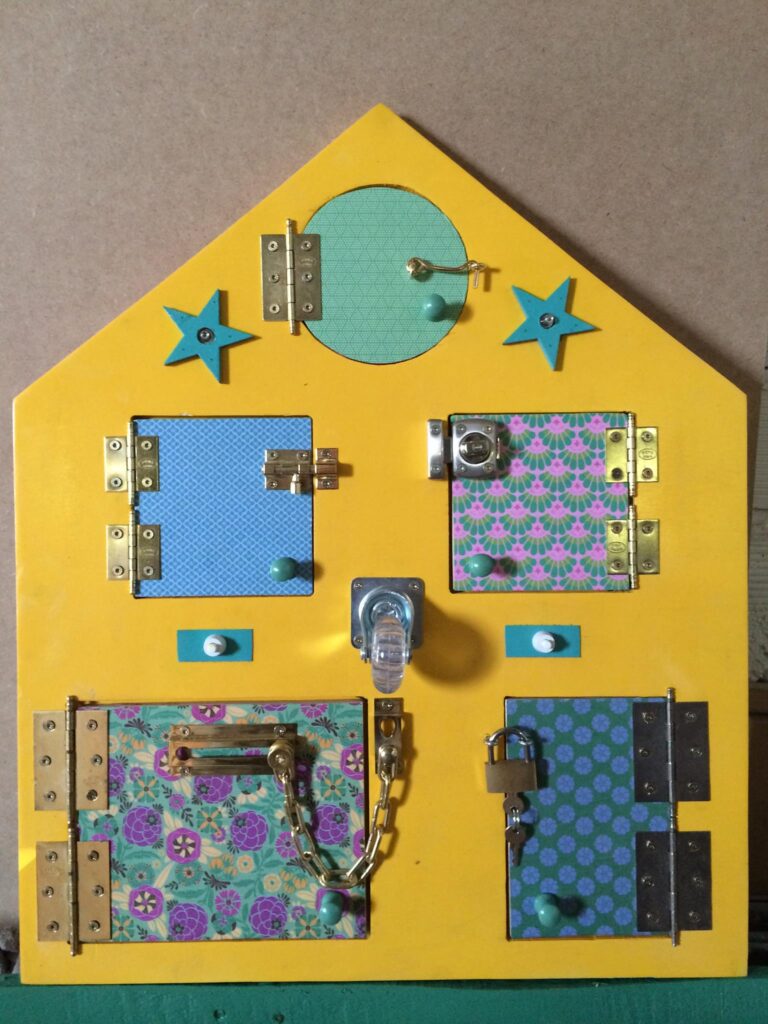
Based on the Montessori method, at BIOSORI we wanted to create this material to help our little ones develop their daily living skills. Made of wood, this particular piece features lights controlled by switches—leaving plenty of room for your imagination… (Source: Materiales Biosori)
The wall-mounted sensory panel
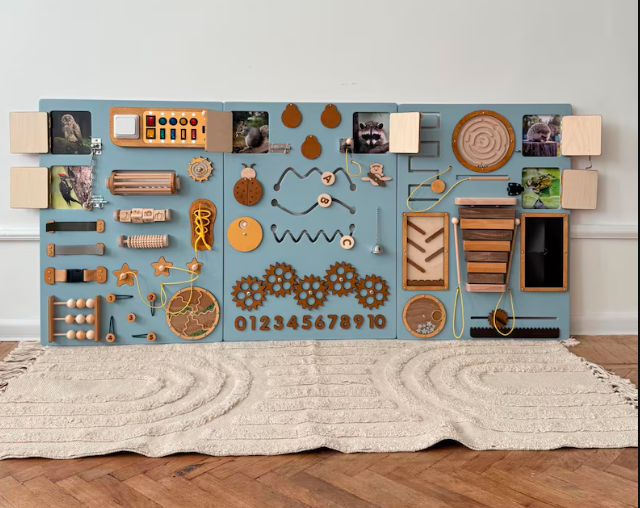
The sensory wall panel is ideal for sensory activities in a room. It promotes a multisensory experience that sparks excitement for playing and learning with locks, latches, buttons, gears, screws, and keys made of metal and wood. A board full of fun that also serves as a creative tool to enhance a child’s learning abilities. It’s a simple activity that will keep your baby stimulated and engaged while also offering many different benefits. Source: Etsy
Make Your Own Felt Board
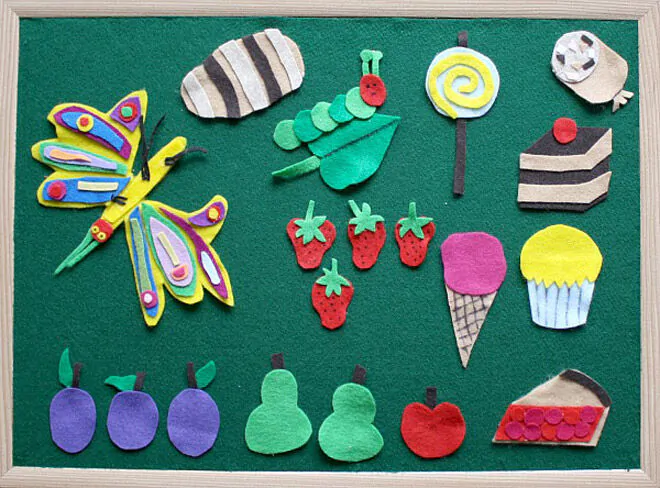
This is a felt storyboard inspired by the book *The Very Hungry Caterpillar*.
The concept:
Natural adhesion: Felt sticks to felt without glue. Children can move the pieces around endlessly.
Interactive: Use the figures (caterpillar, fruits, butterfly) to tell the story while manipulating the pieces.
How does it work?
The background: A rigid frame covered with a large sheet of felt.
The figures: Shapes cut out of scraps of colored felt. Details are glued on or drawn with a marker.
The benefit: Ideal for learning to count, naming colors, and developing imagination through tactile play
Buckle Up
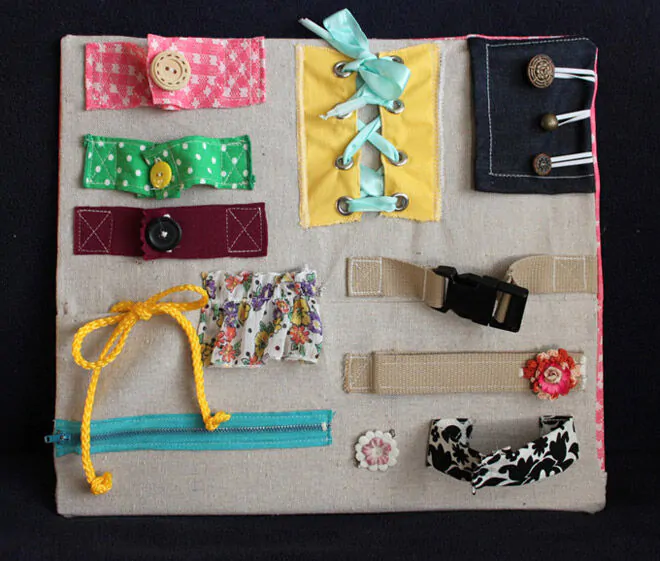
This is a fabric Montessori activity board (or busy board).
The concept:
Fine motor skills: A training tool for learning to use everyday fasteners.
Independence: Children practice buttoning, lacing, zipping, and clipping.
Included items:
- Zippers and plastic buckles.
- Buttons of various sizes.
- Laces, ribbons, and Velcro.
The benefit of this DIY toddler busy board: Develops dexterity and coordination while having fun.
Peek-a-Boo Edition
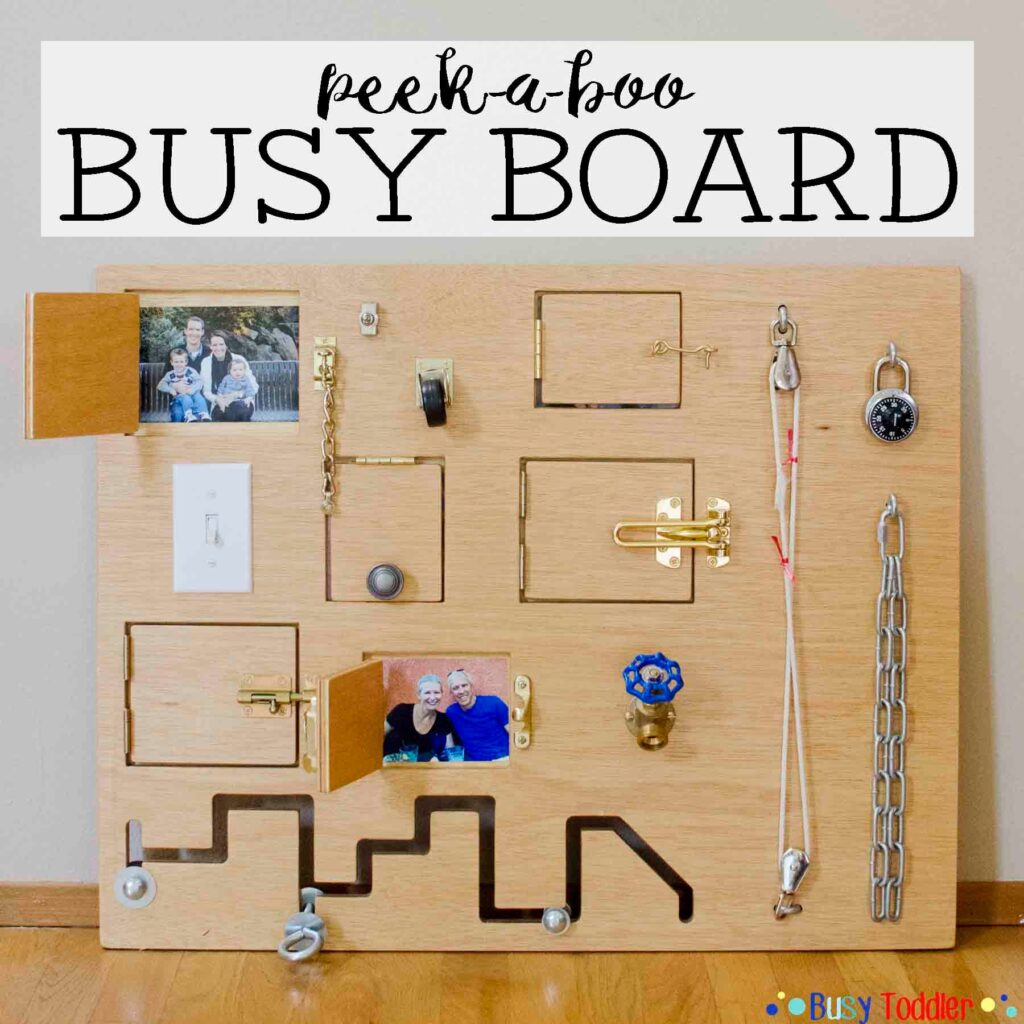
This is a personalized “peek-a-boo” board book, a sensory and emotional activity perfect for toddlers.
The concept:
Recognition: The child is surprised to discover familiar faces (Dad, Mom, and themselves) under the flaps.
Interaction: The act of opening and closing the flaps, combined with clapping, turns the activity into a rhythmic game.
Fun x 2
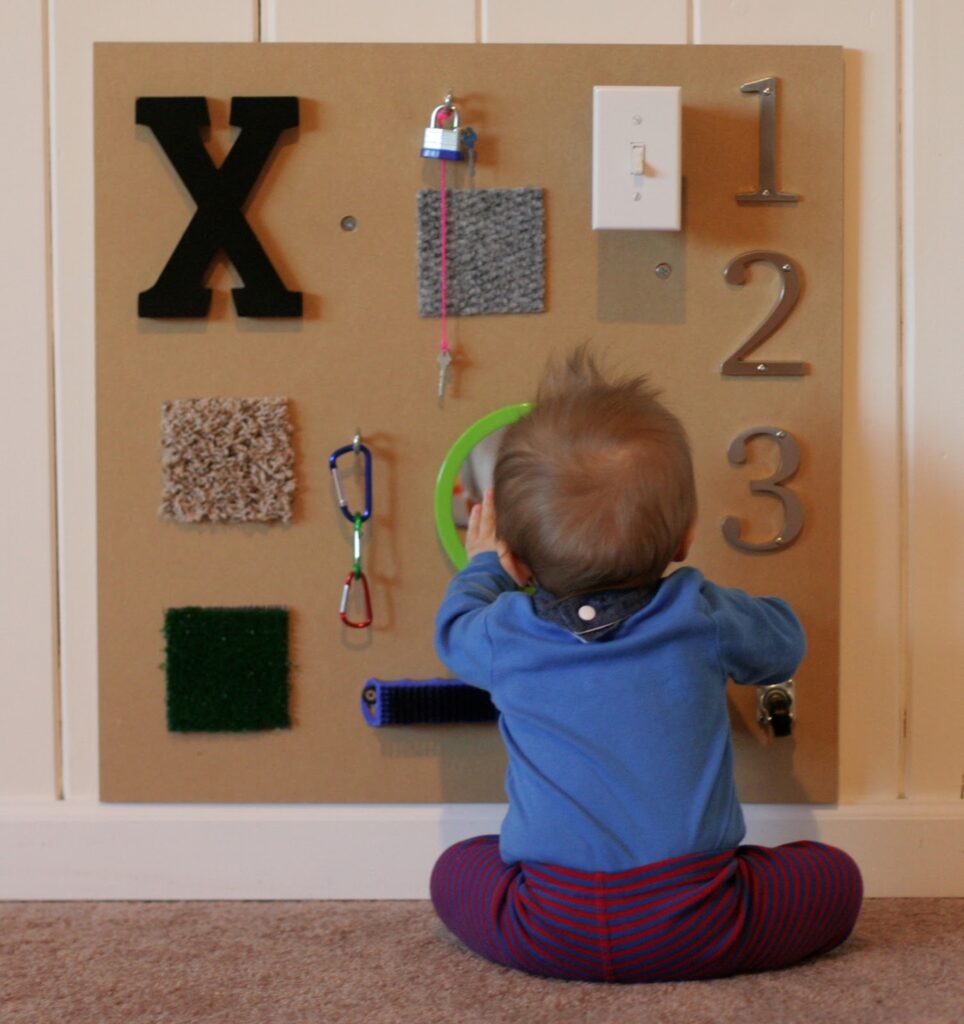
This is a wooden sensory exploration board.
The concept:
Exploring everyday life: It features “off-limits” or fascinating objects (light switches, padlocks, and keys) that can be handled safely.
Multisensory development: The child explores various textures (carpet, grass), looks at themselves in the mirror, and discovers numbers and letters.
The benefit: Stimulating curiosity, fine motor skills, and an understanding of cause-and-effect relationships through tactile exploration.
Lift-the-flap busy board
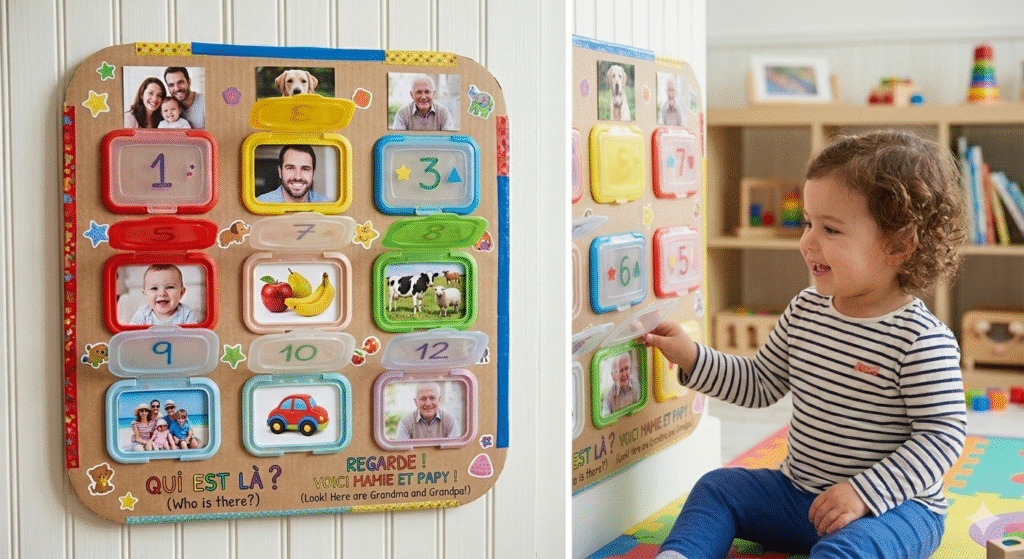
Here’s a fun and interactive idea: a “peek-a-boo” activity board made from cardboard, wipe lids, and pictures. The flaps let your little one discover familiar faces while having fun.
Added Learning
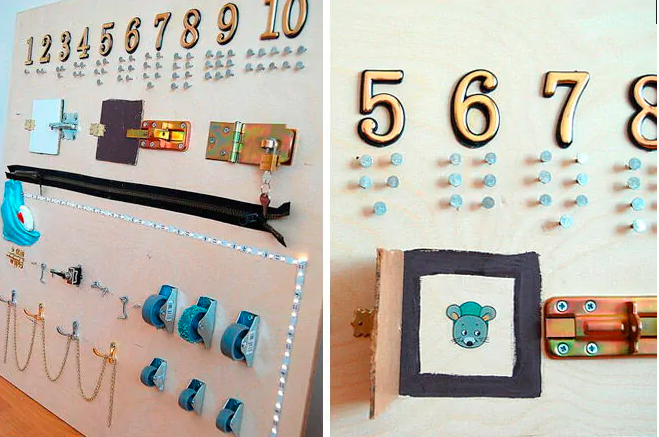
That is a wonderful DIY setup! The use of physical hardware like latches, zippers, and wheels makes the sensory experience much more engaging for a child.
Looking at the board, some clever design choices go beyond just basic counting
BOY AT PLAY
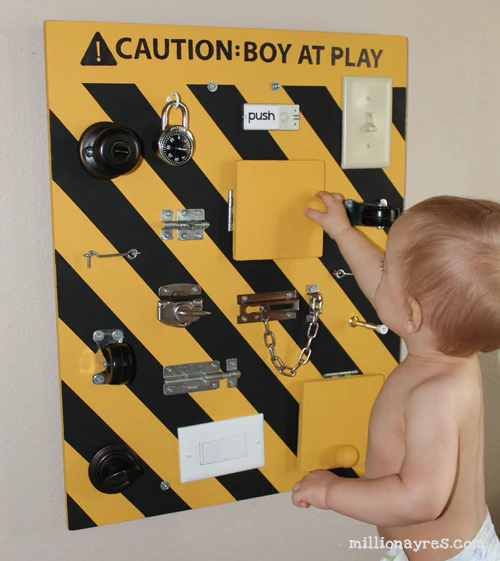
That is a fantastic DIY project! Using a “construction zone” theme with the hazard stripes and the “Caution” sign gives a standard busy board a really fun, cohesive look. It’s also a great way to repurpose hardware store odds and ends into a sensory powerhouse.
Summary
DIY Toddler Busy Board: Early Learning Play Ideas to Boost Development
This interactive toy features various activities (locks, buttons, textures) that stimulate fine motor skills and problem-solving. Whether store-bought or custom-made, it encourages independence and sensory exploration.
A must-have for keeping your child engaged in a meaningful way while fostering their curiosity!
Pin for Later, Explore Forever!
